
Containment before removal.
Mold Remediation
Mold work begins by controlling the environment. WaterFree evaluates the affected area, establishes containment and follows a deliberate remediation process designed to limit the spread of contamination beyond the work area.
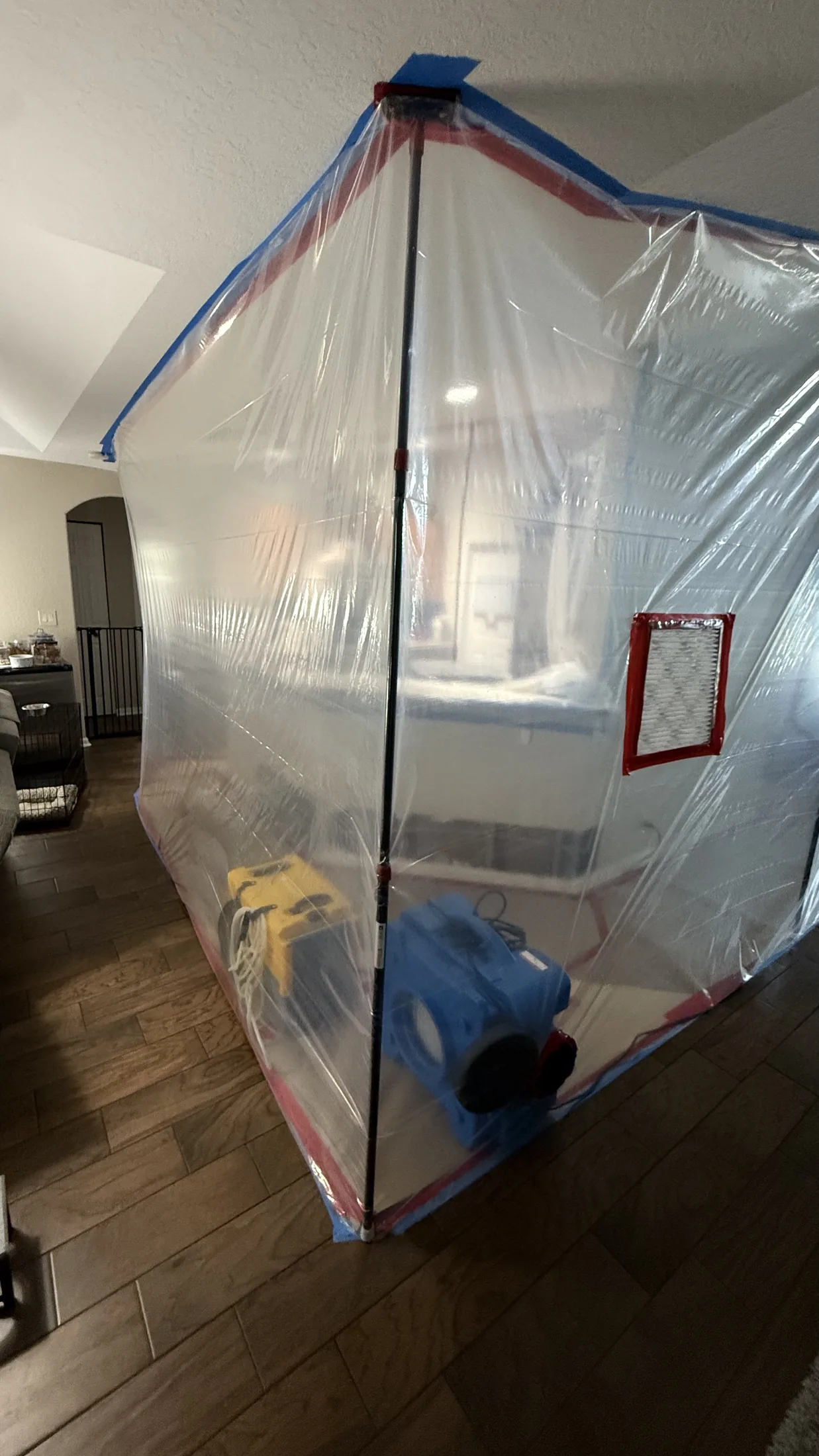
Containment and air filtration equipment were installed to isolate the kitchen remediation work area.
What the process may include
A scope built around the property.
Final recommendations depend on accessibility, safety, materials, the source of damage and the conditions observed during the assessment.
- 01Assessment of moisture and visible conditions
- 02Containment of the work area
- 03HEPA air filtration and cleaning
- 04Removal of affected materials when required
Documented stage
Clarity before the next decision.
- A controlled work zone
- Clear remediation documentation
- A practical plan for the moisture source
WaterFree field evidence
See what the documented stages actually show.
This sequence documents the remediation work area and its visible condition after remediation. The photographs do not establish that independent clearance was obtained; that conclusion requires the applicable verification or laboratory record.
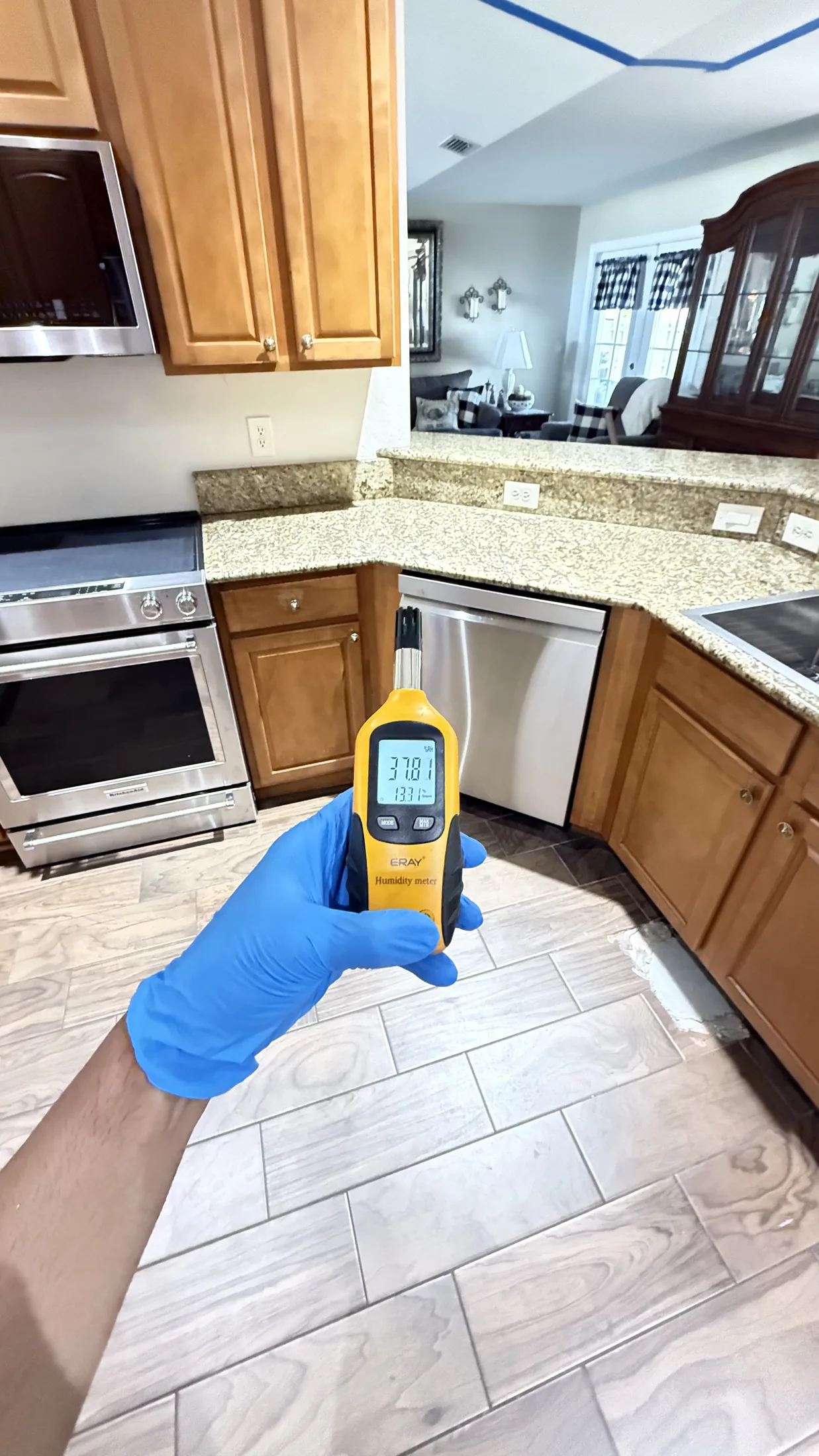
Indoor environmental conditions were documented during the initial kitchen assessment.
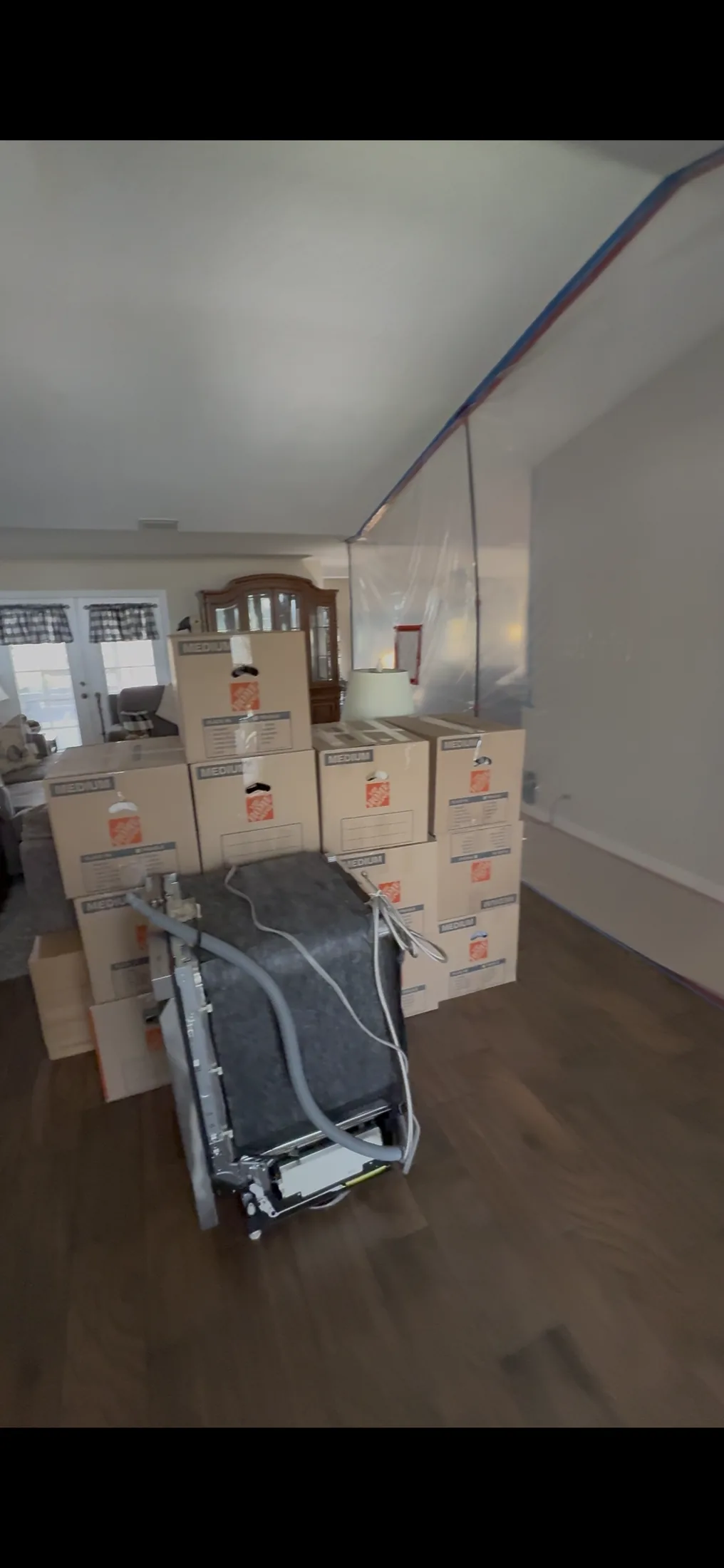
Nearby contents were packed and moved away from the planned work zone.
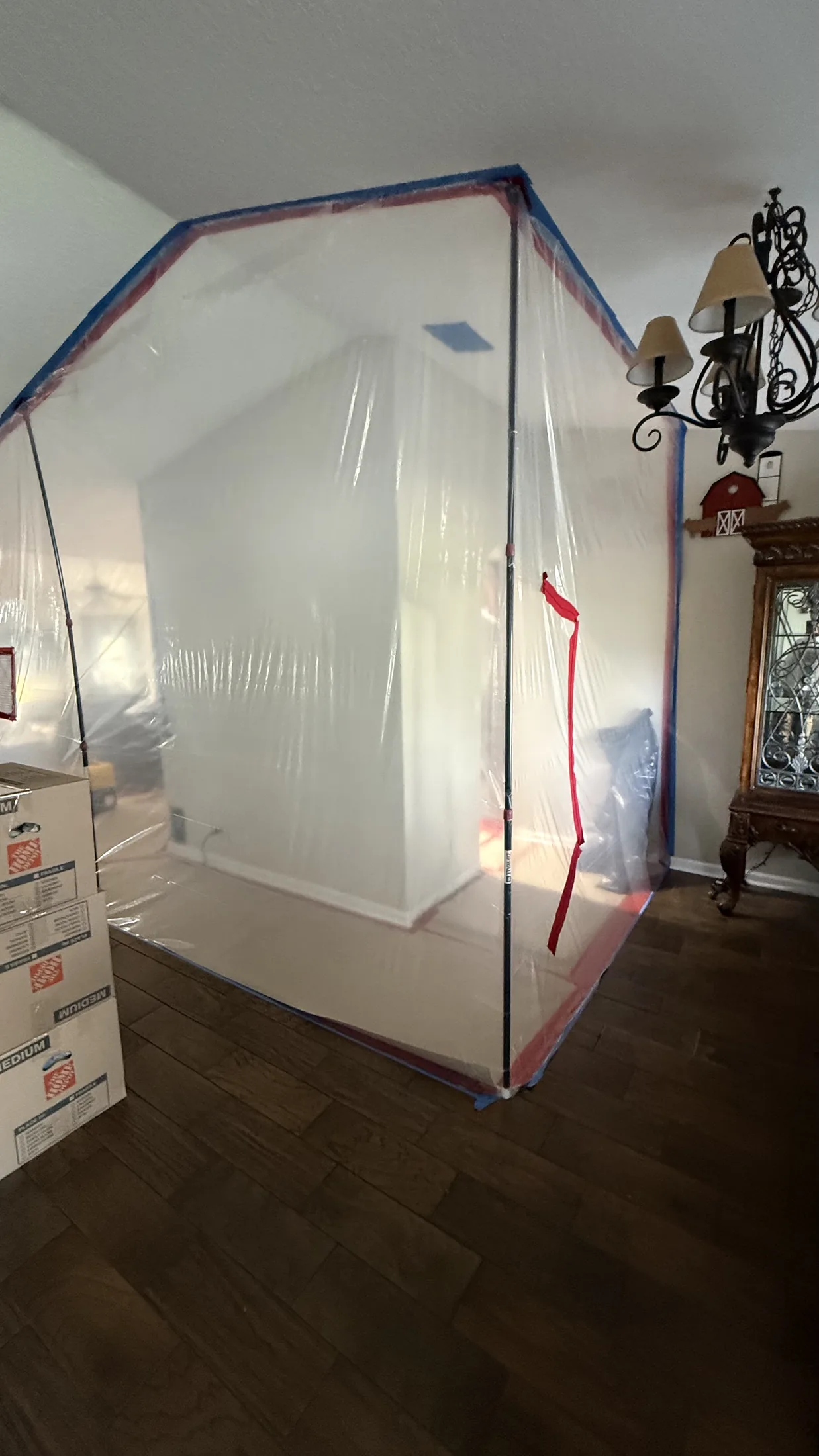
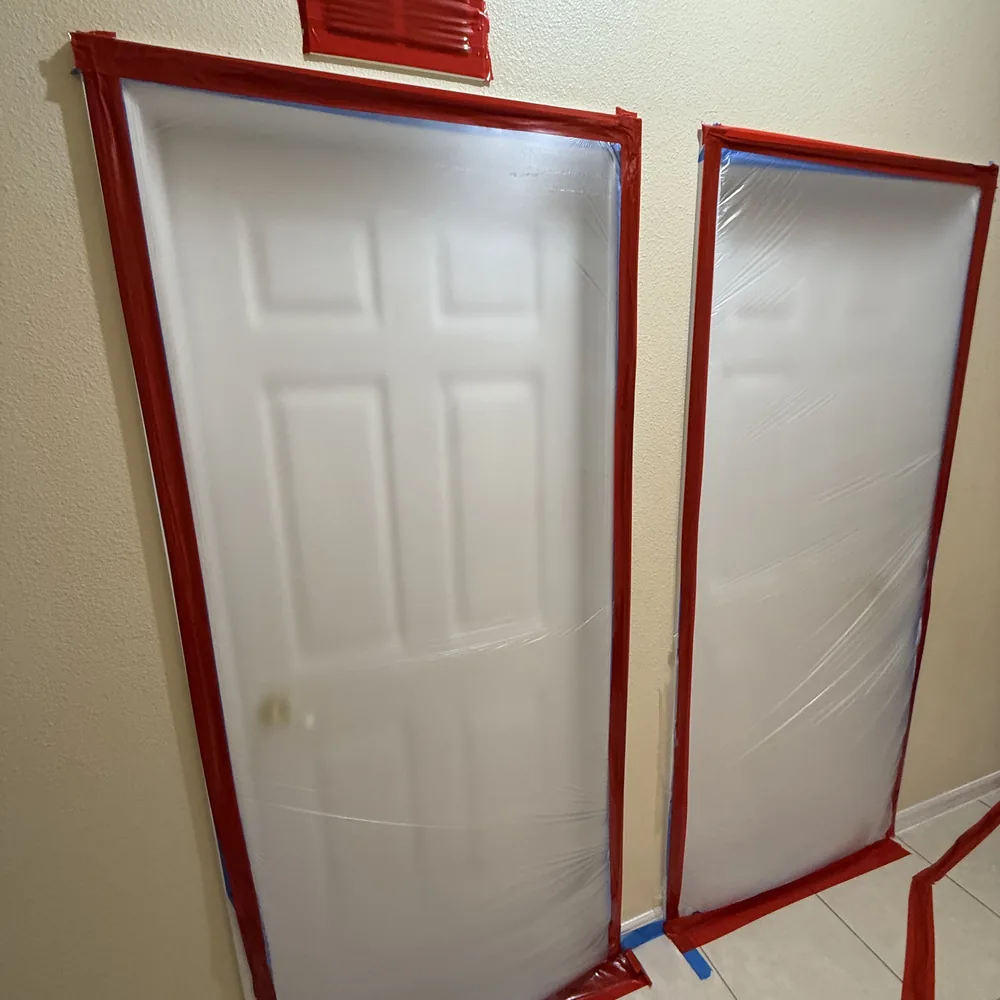
Containment extending from floor to ceiling was built to separate the work area from the occupied space.
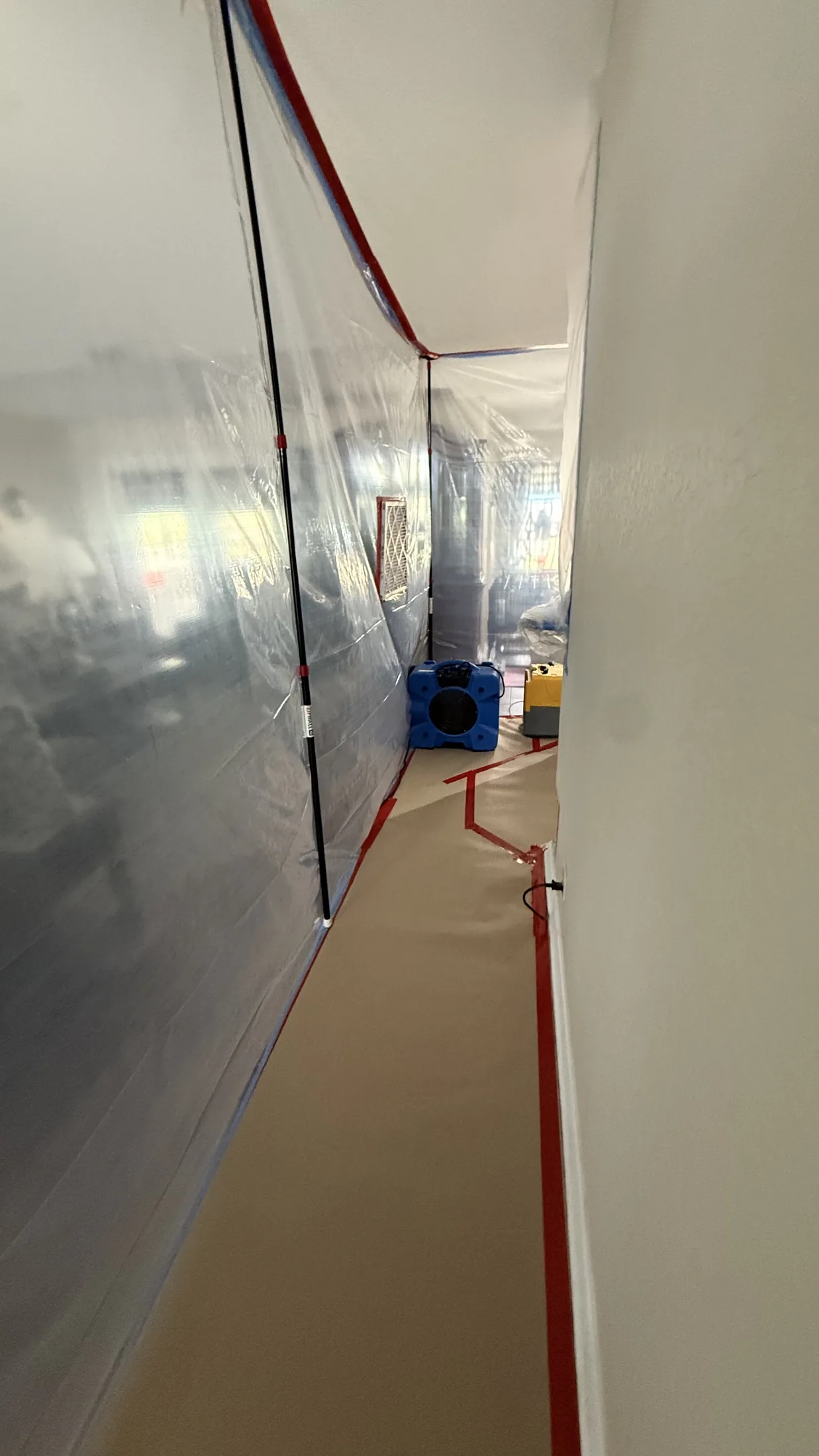
The containment entrance and adjacent surfaces were sealed before removal activity.
Air filtration equipment operated inside the contained work area.
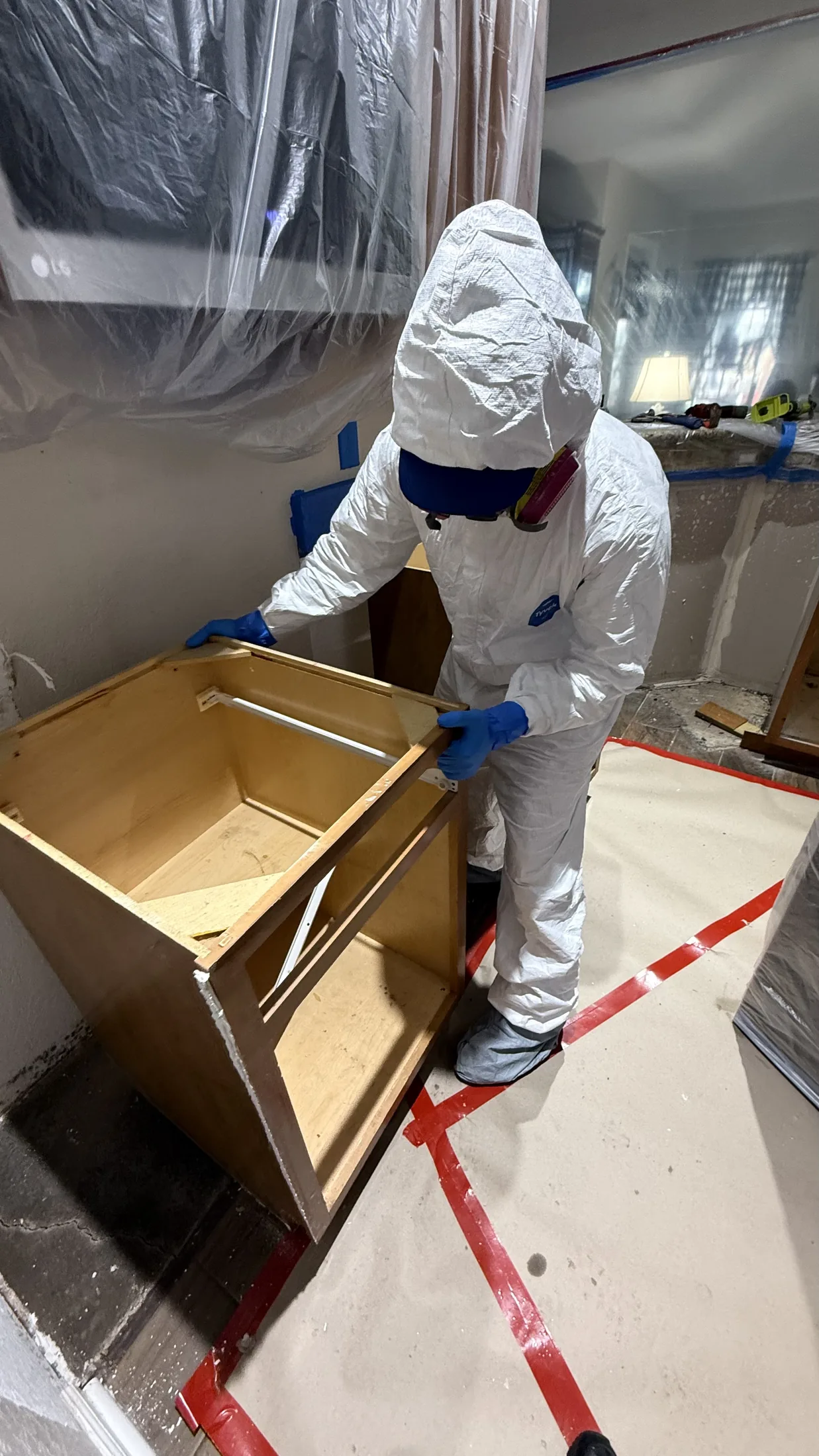
A technician in full PPE removed affected lower cabinet components inside containment.
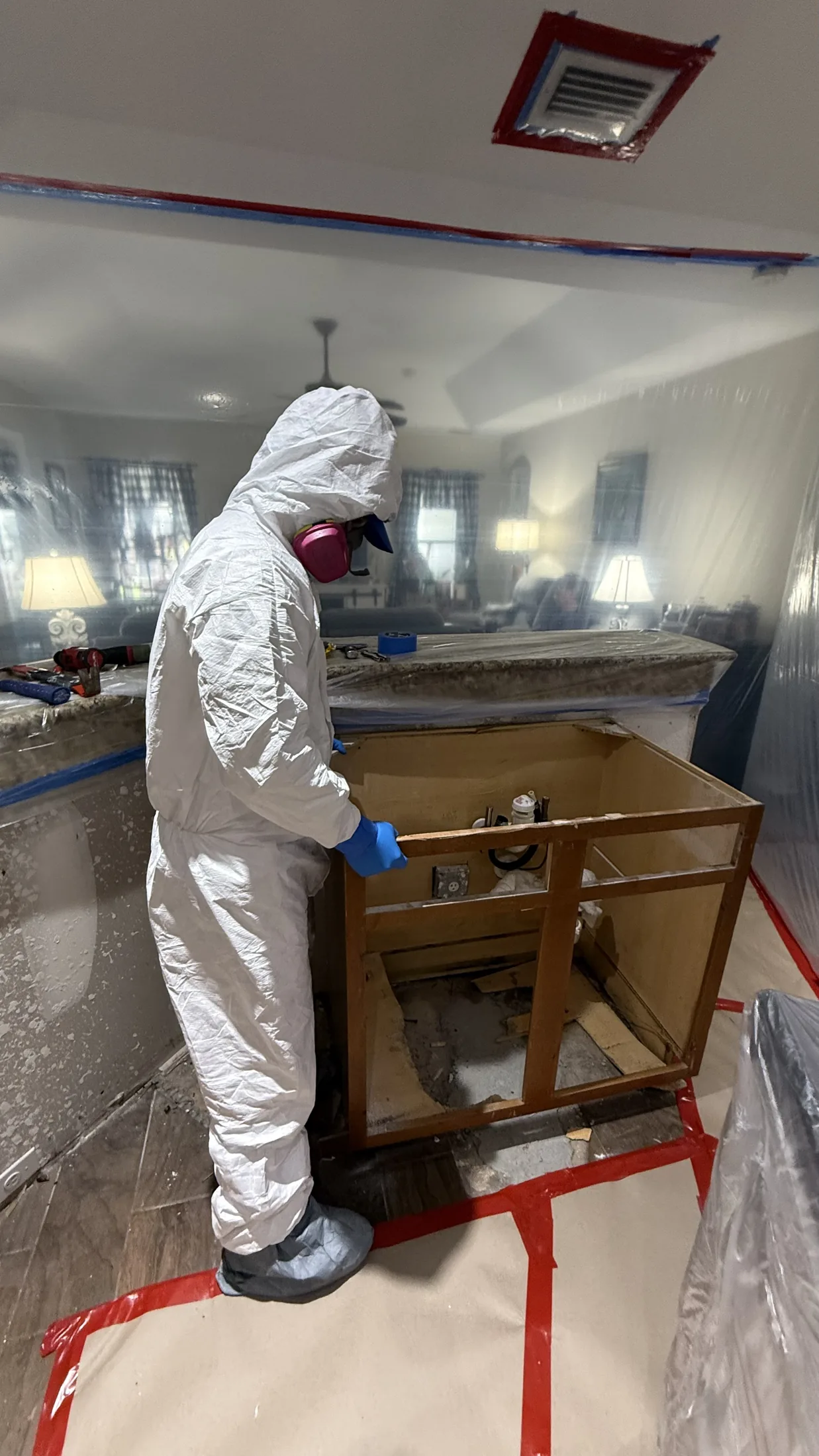
Lower cabinet components were opened to expose the documented affected areas.
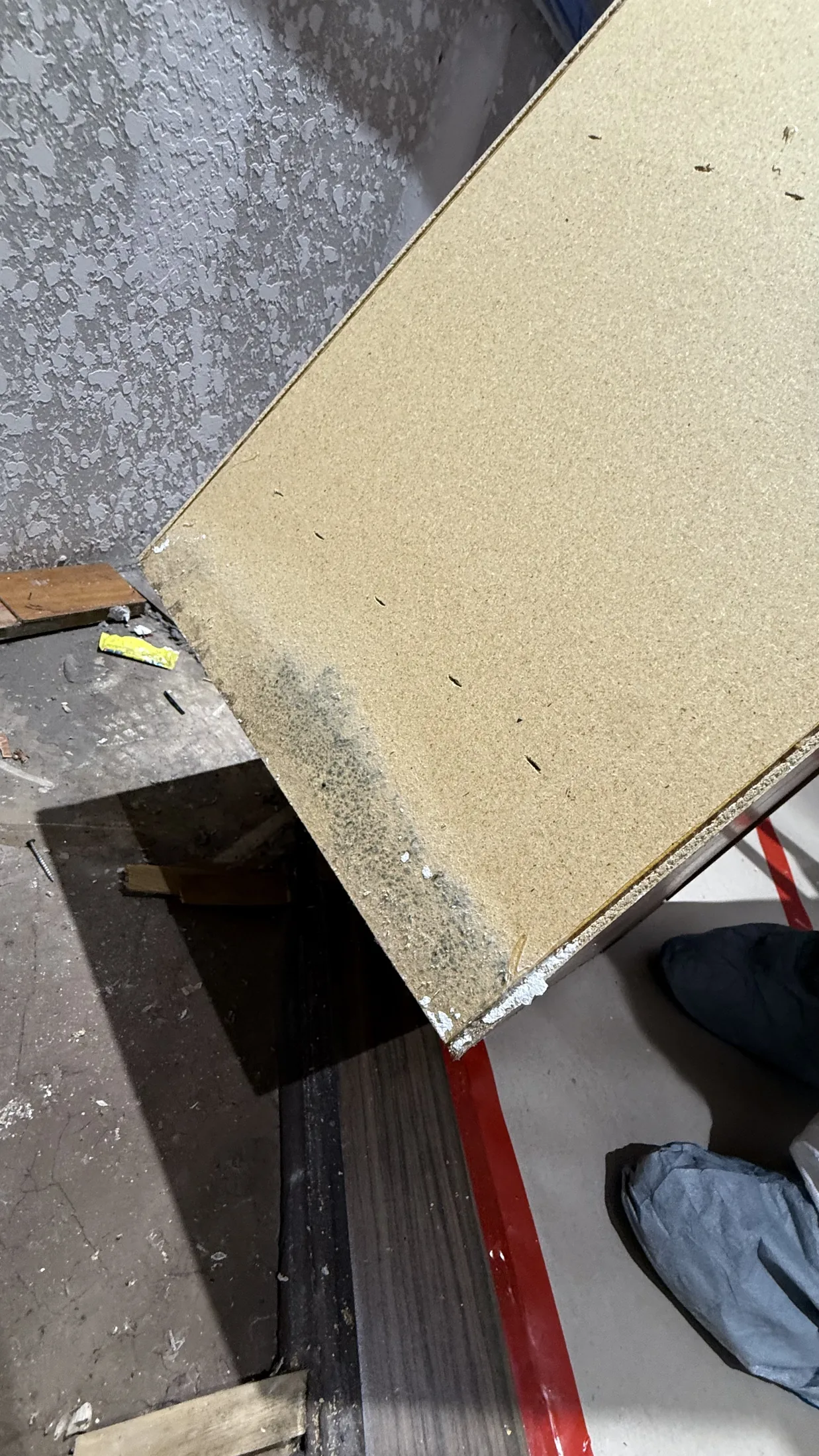
Removed cabinet material was documented inside the controlled work area.
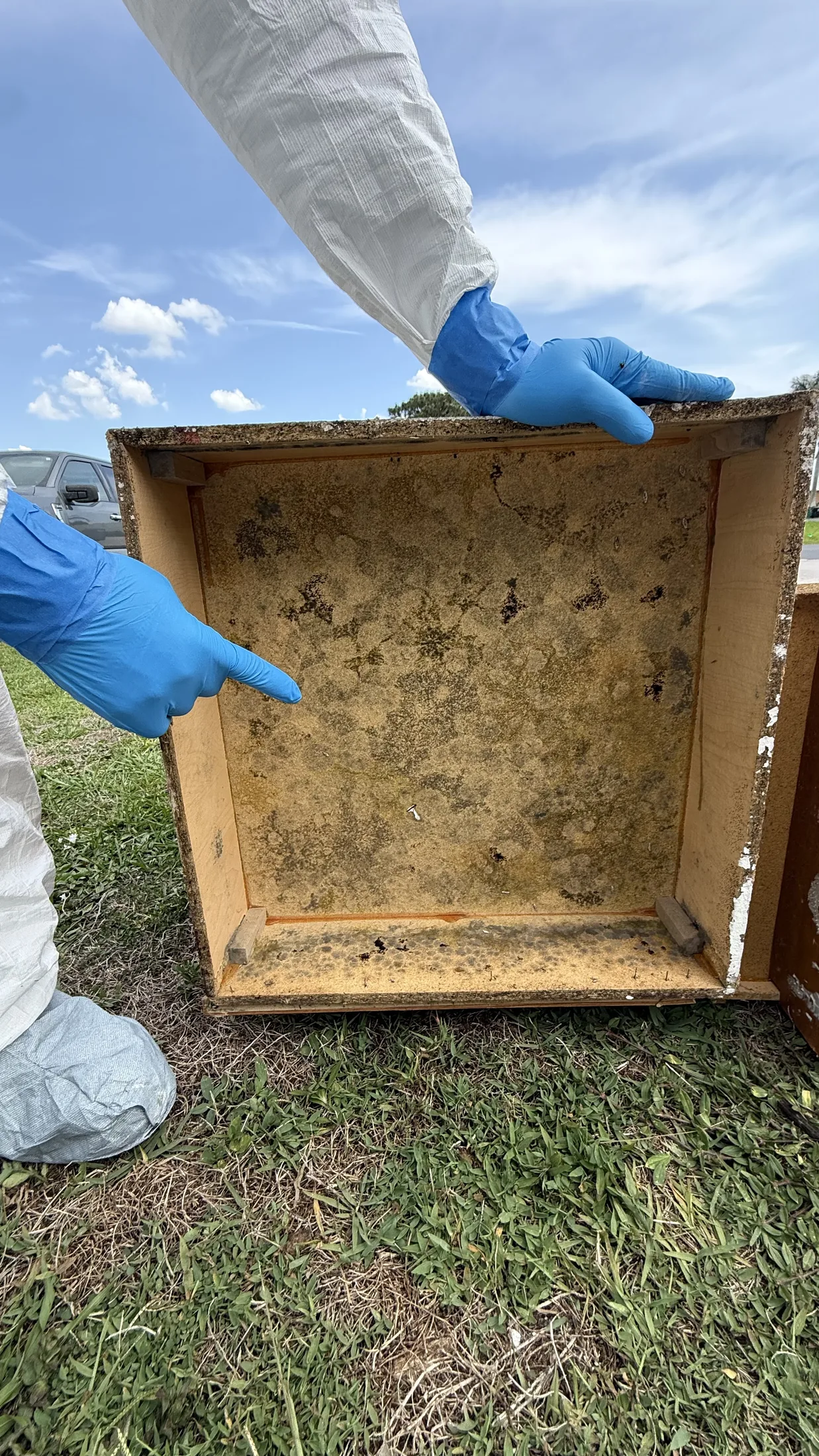
The back of a removed cabinet component was documented after concealed staining was exposed.
View 13 additional documented photos
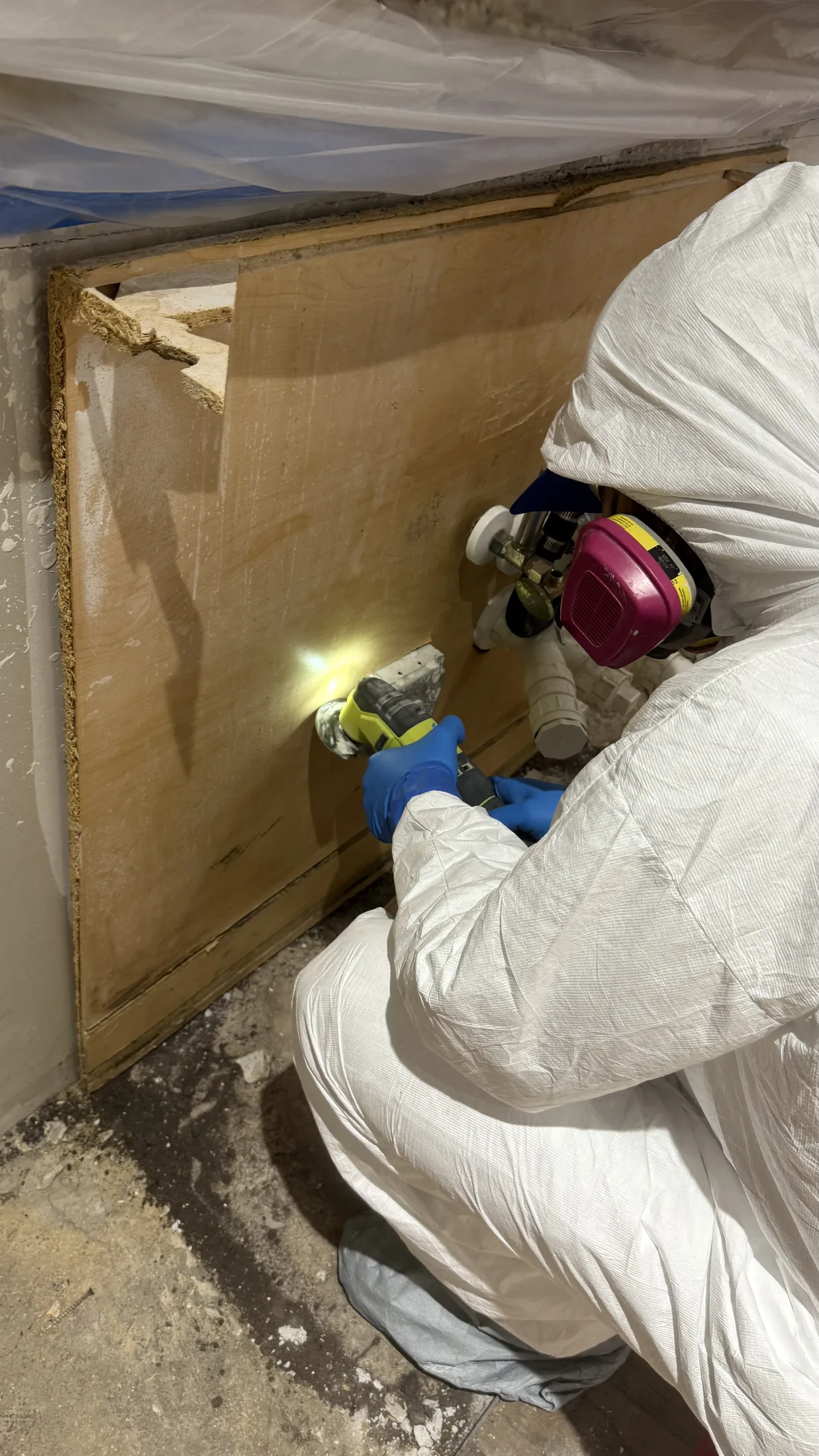
Cabinet materials were removed in a controlled work area while the technician wore full PPE.
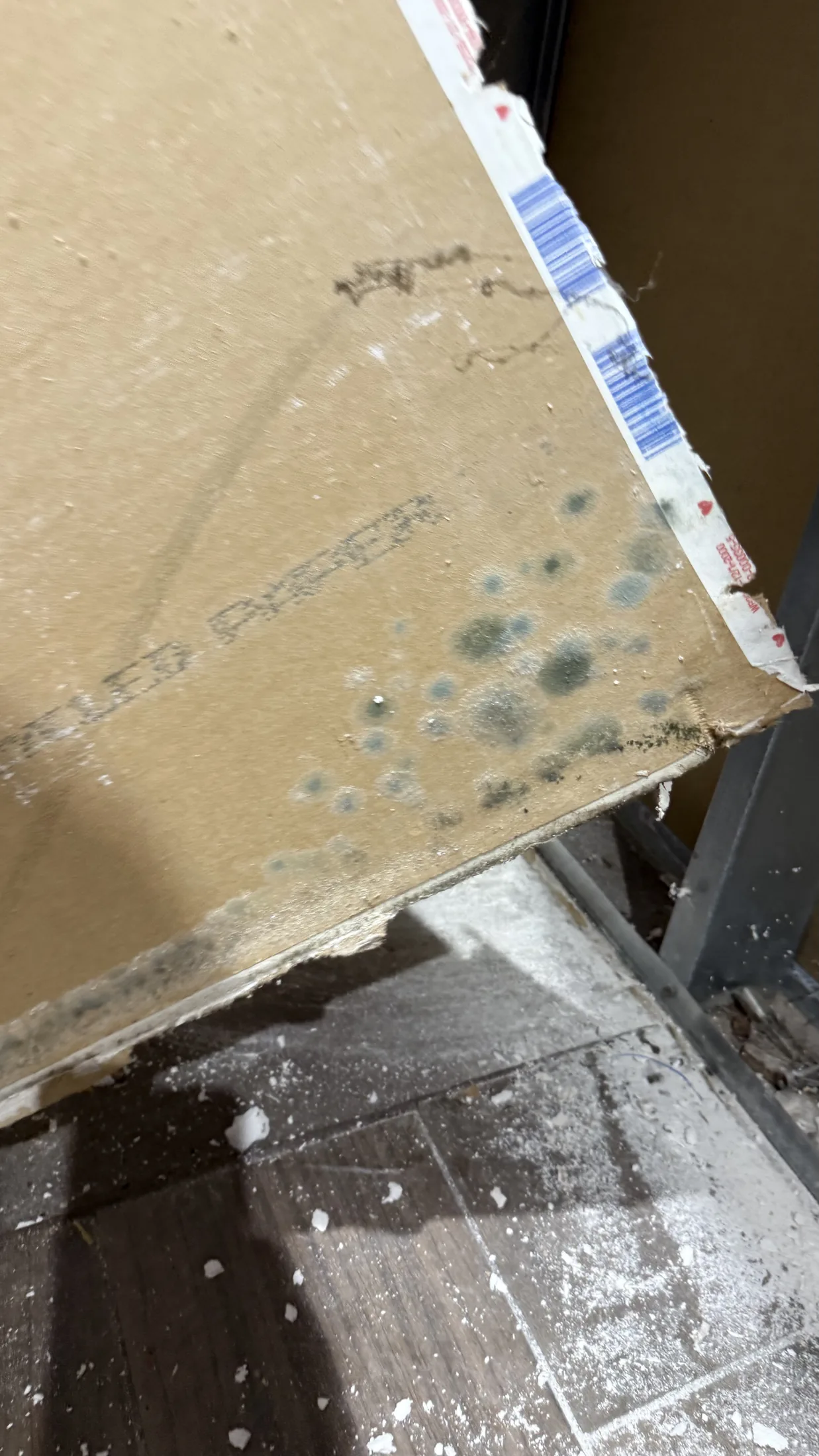
Additional material conditions were photographed as controlled removal progressed.
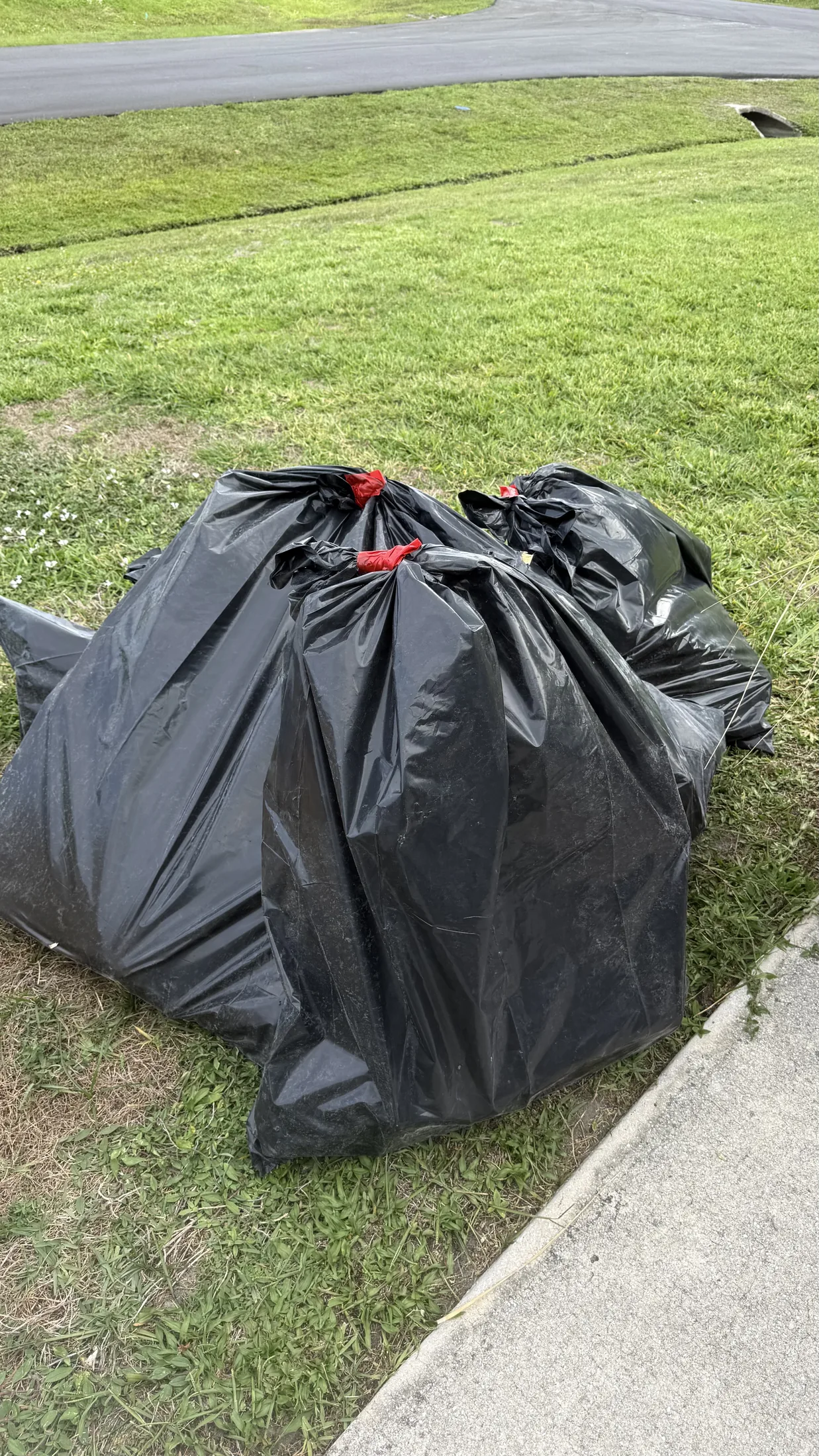
Removed debris was bagged before it left the controlled work area.
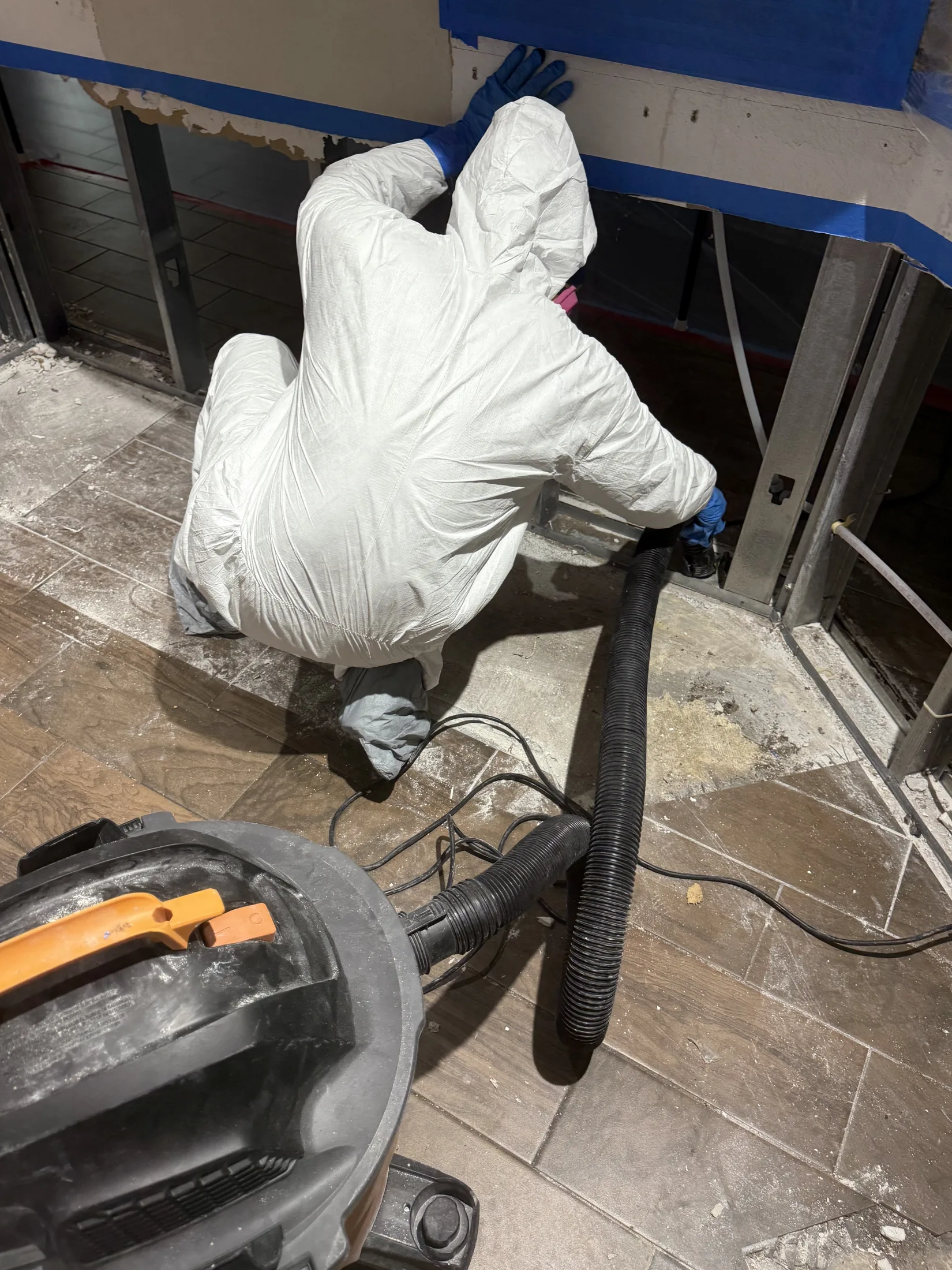
Detailed vacuuming removed debris from exposed floor and wall cavities.
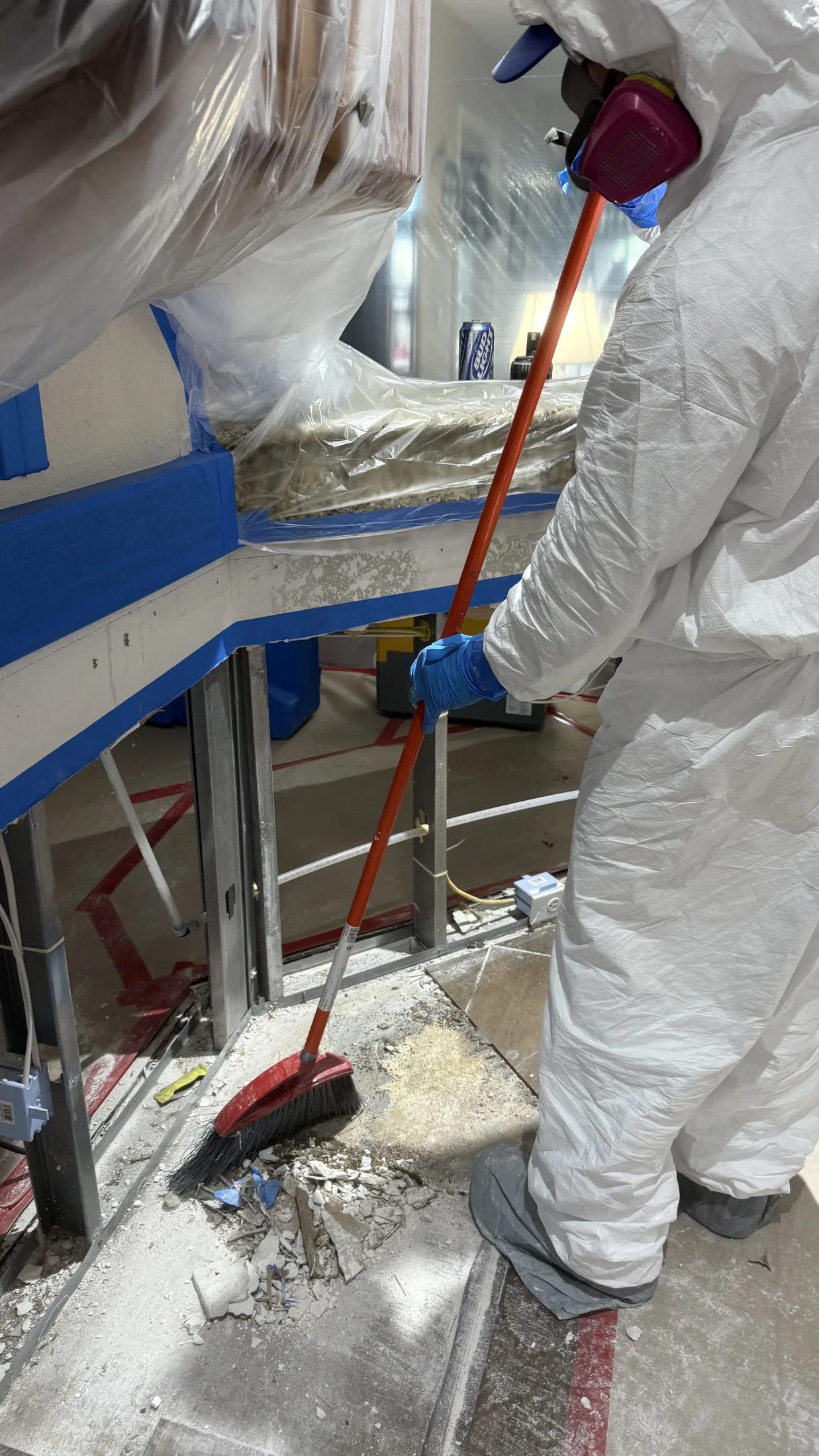
Loose floor debris was collected before the detailed cleaning stage continued.
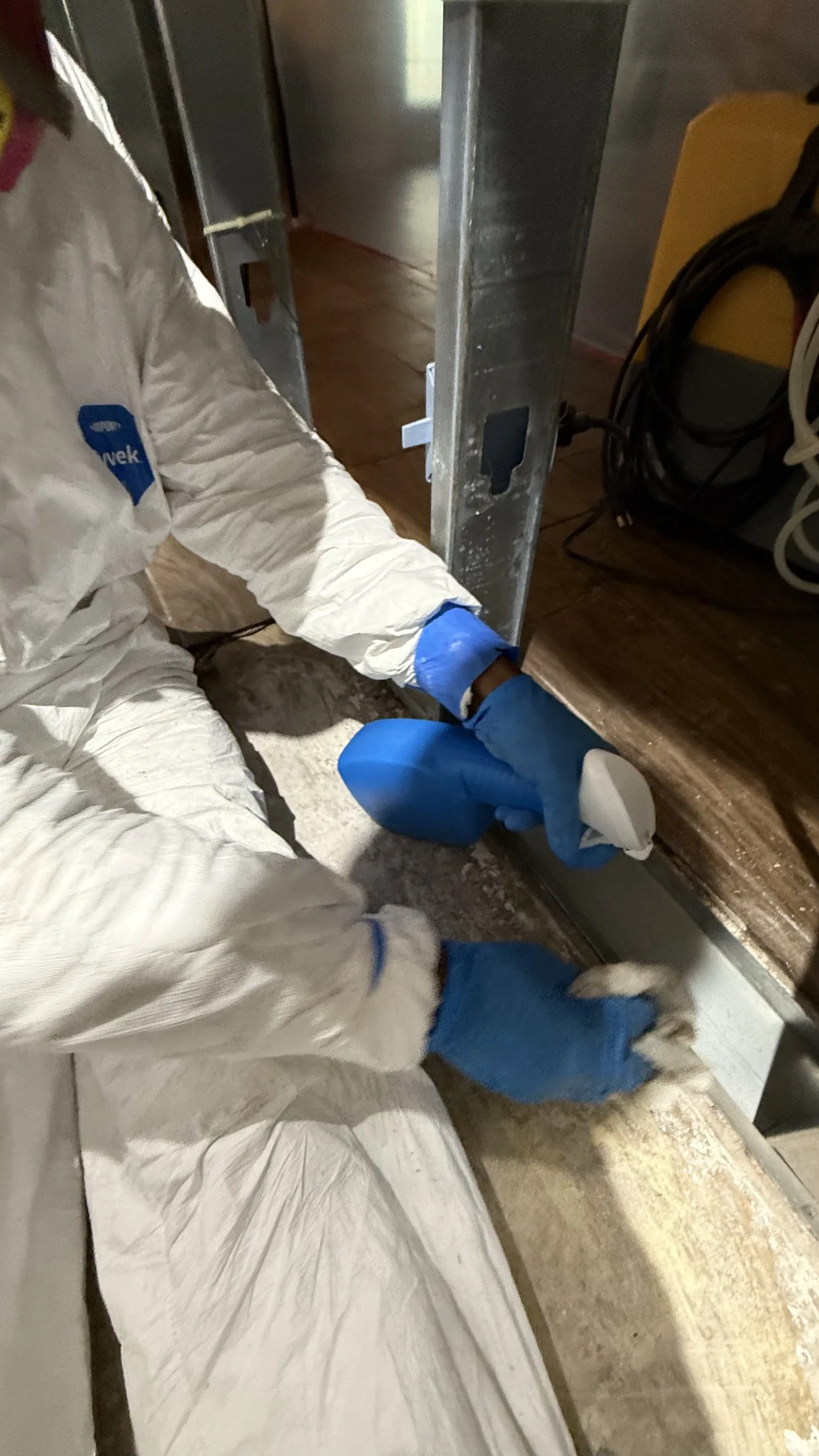
Exposed surfaces were cleaned and treated during the remediation phase.
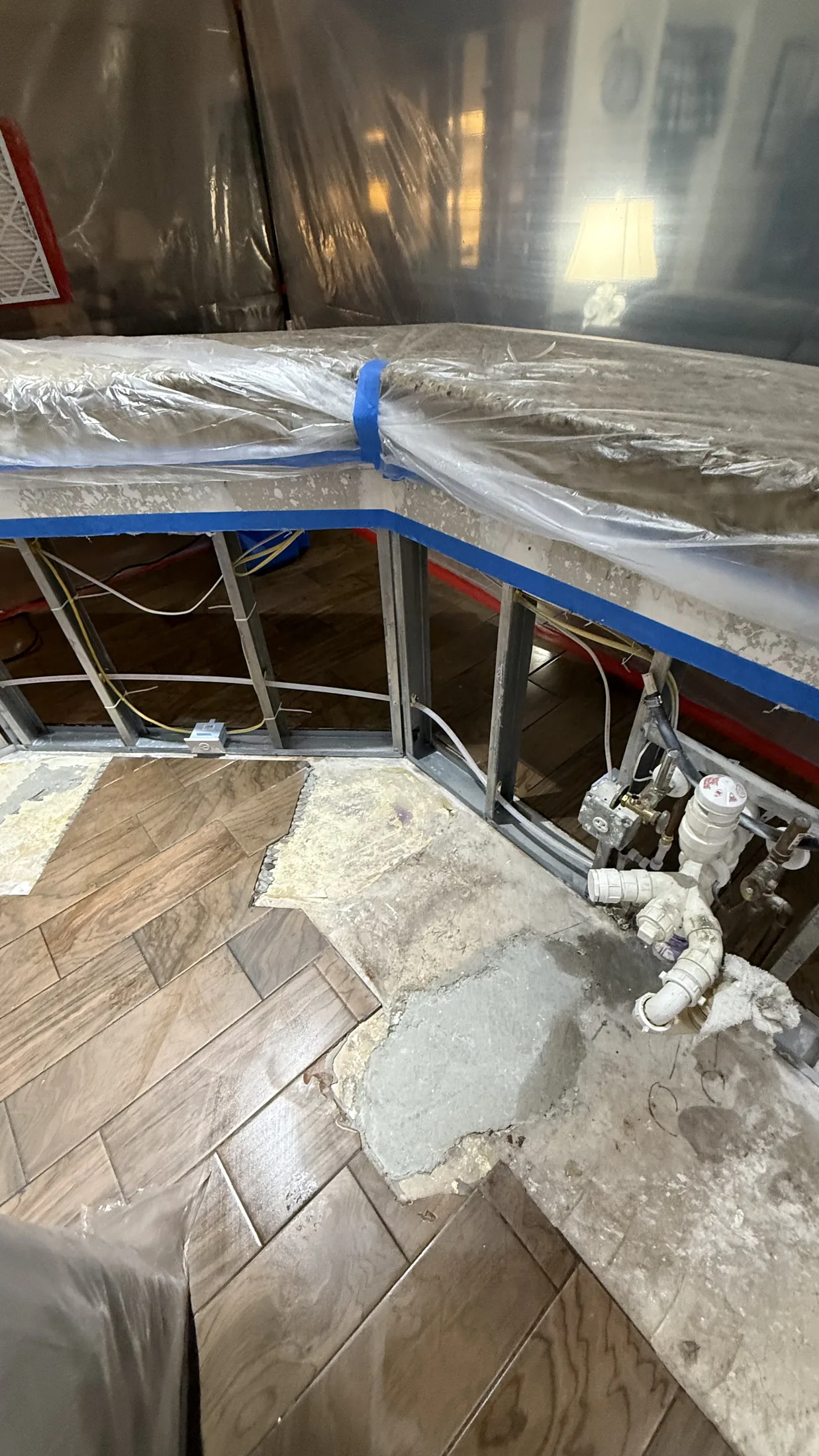
The open work area was documented during final cleaning and drying activity.
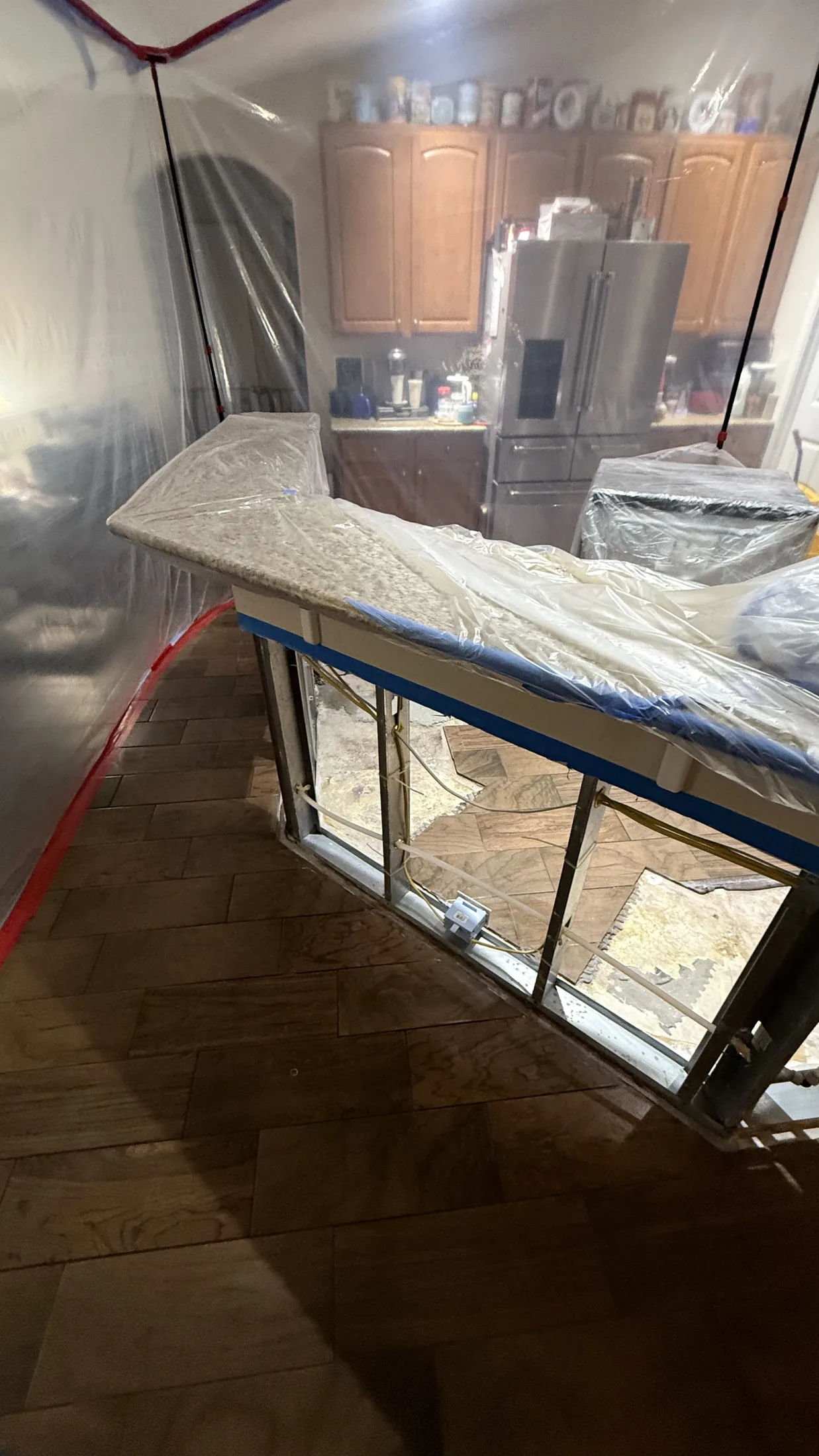
Drying equipment remained positioned around the opened lower wall and cabinet area.
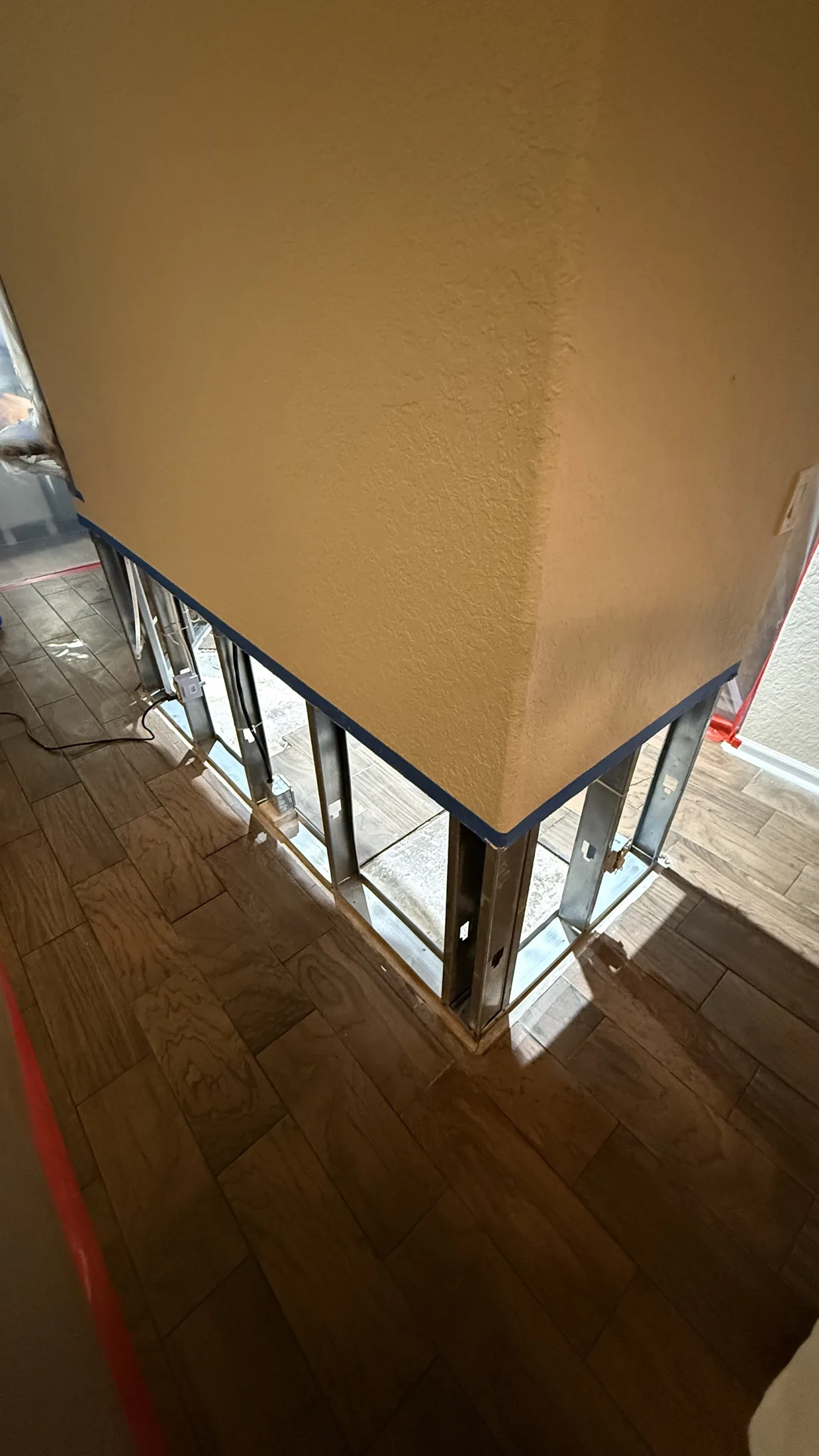
Environmental conditions were monitored while final cleaning and drying continued.
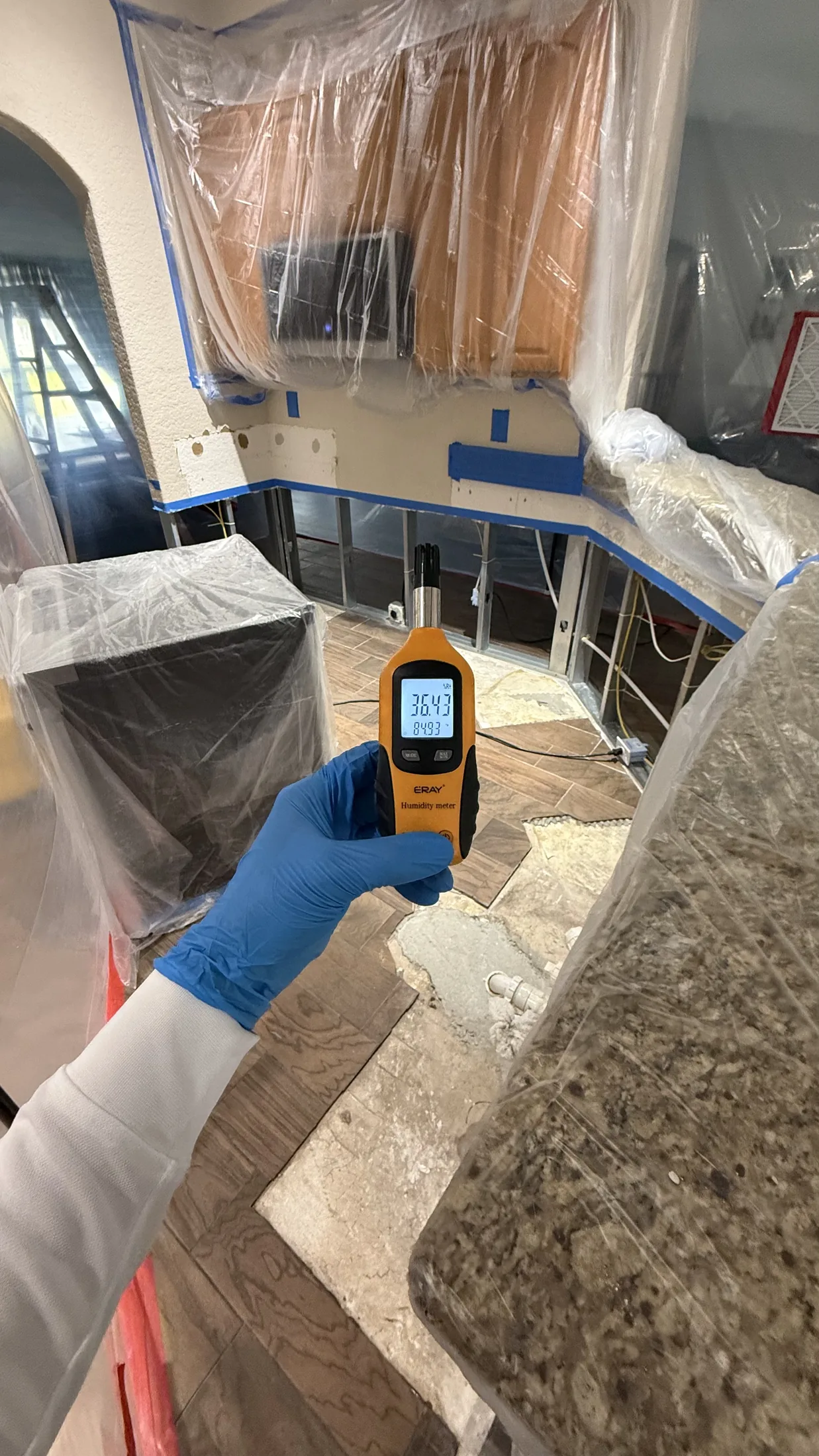
Indoor temperature and relative humidity were recorded during the final drying and cleaning phase.
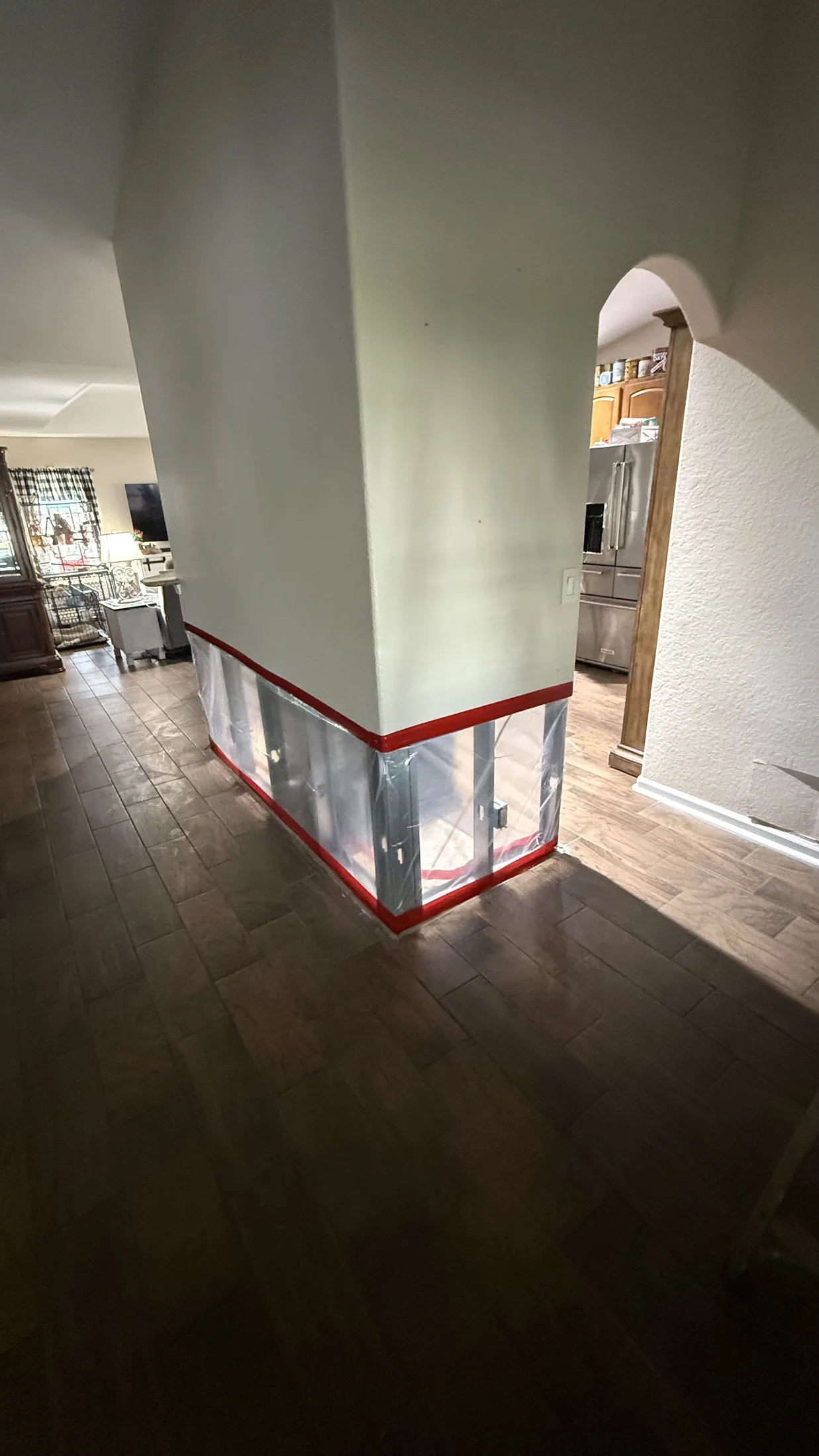
The opened kitchen work area was photographed for review after remediation.
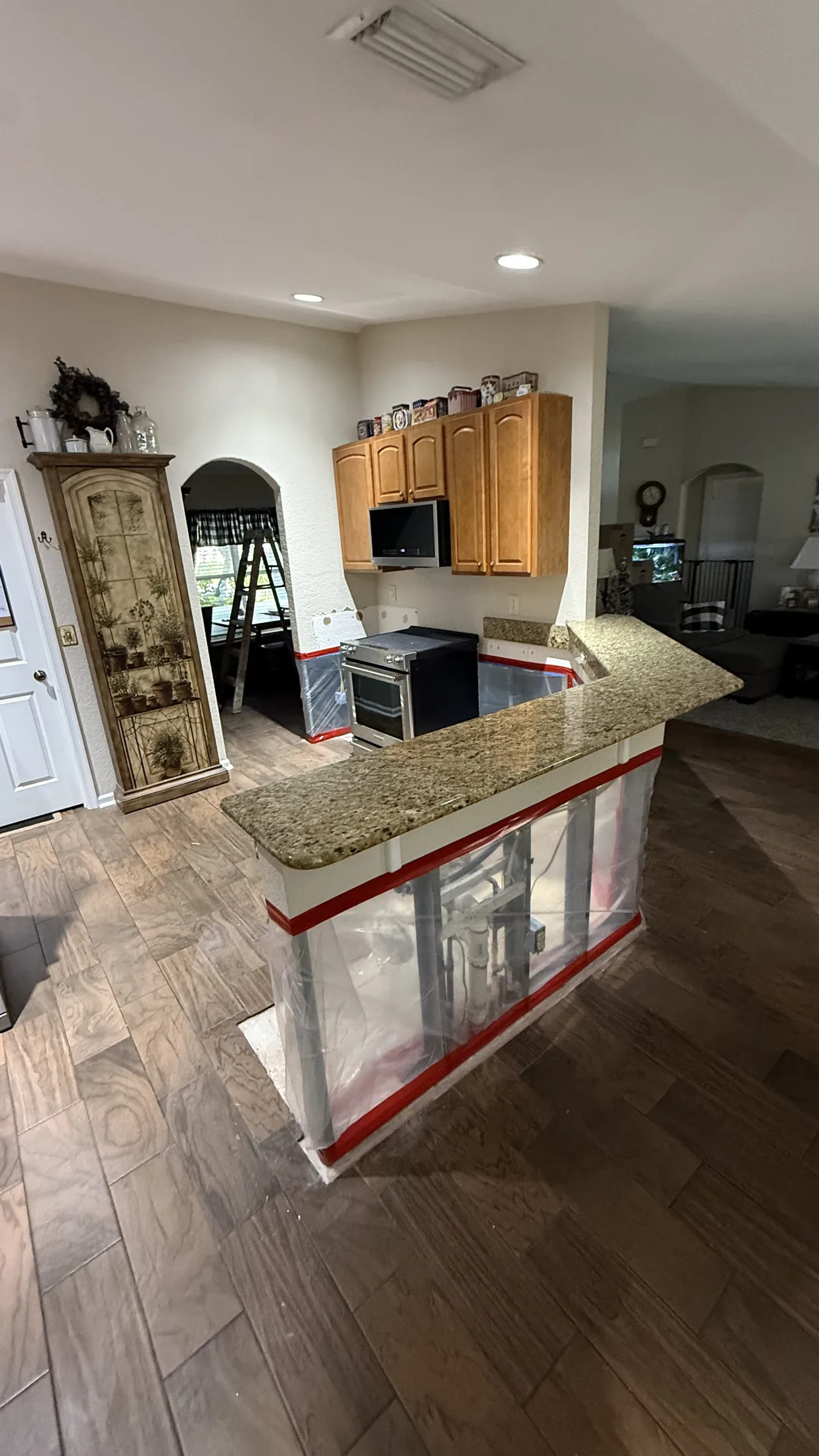
Lower wall and cabinet areas remained accessible for verification and later rebuilding.
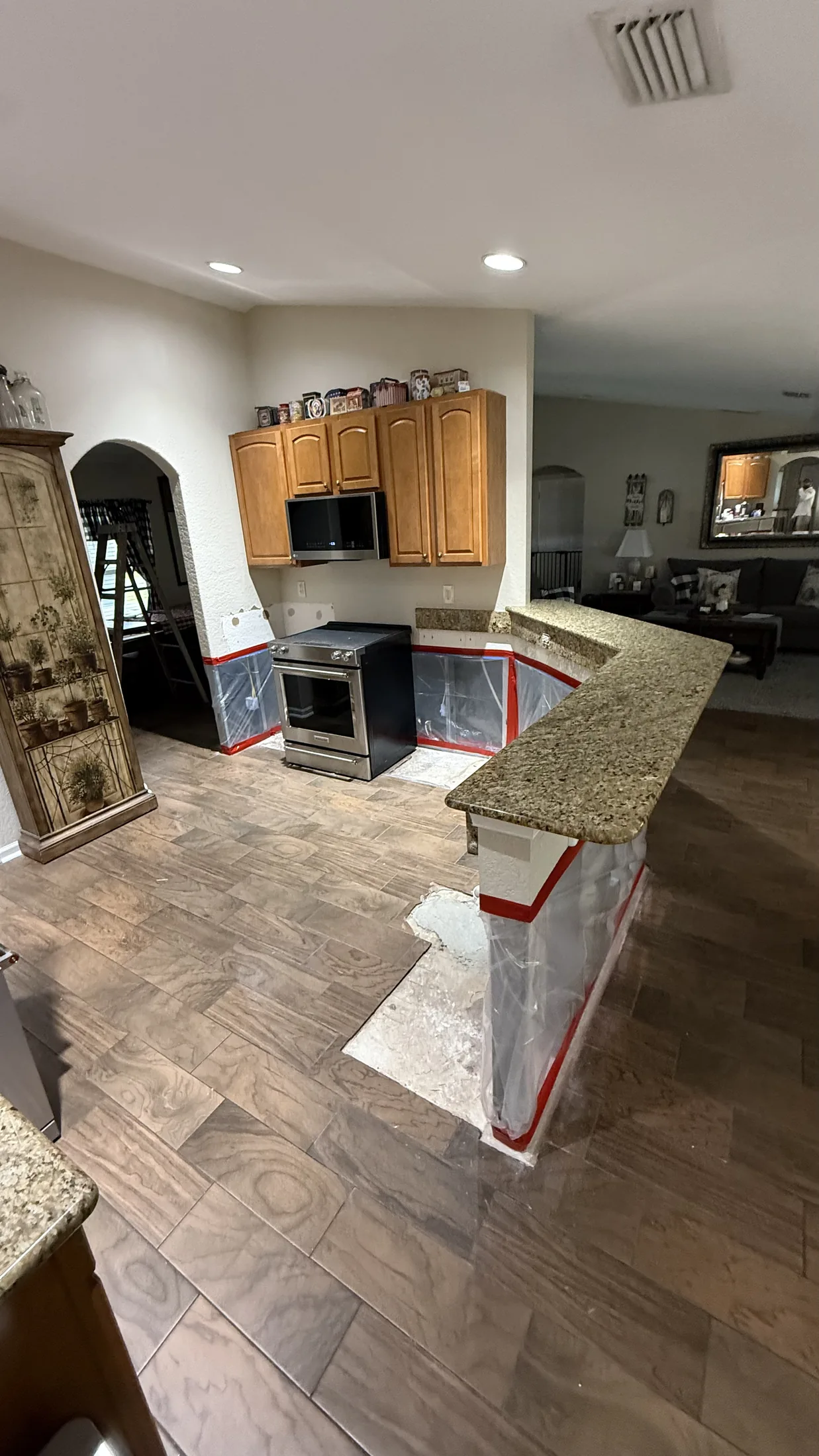
The condition after remediation was documented with lower areas still open for verification and later rebuilding.
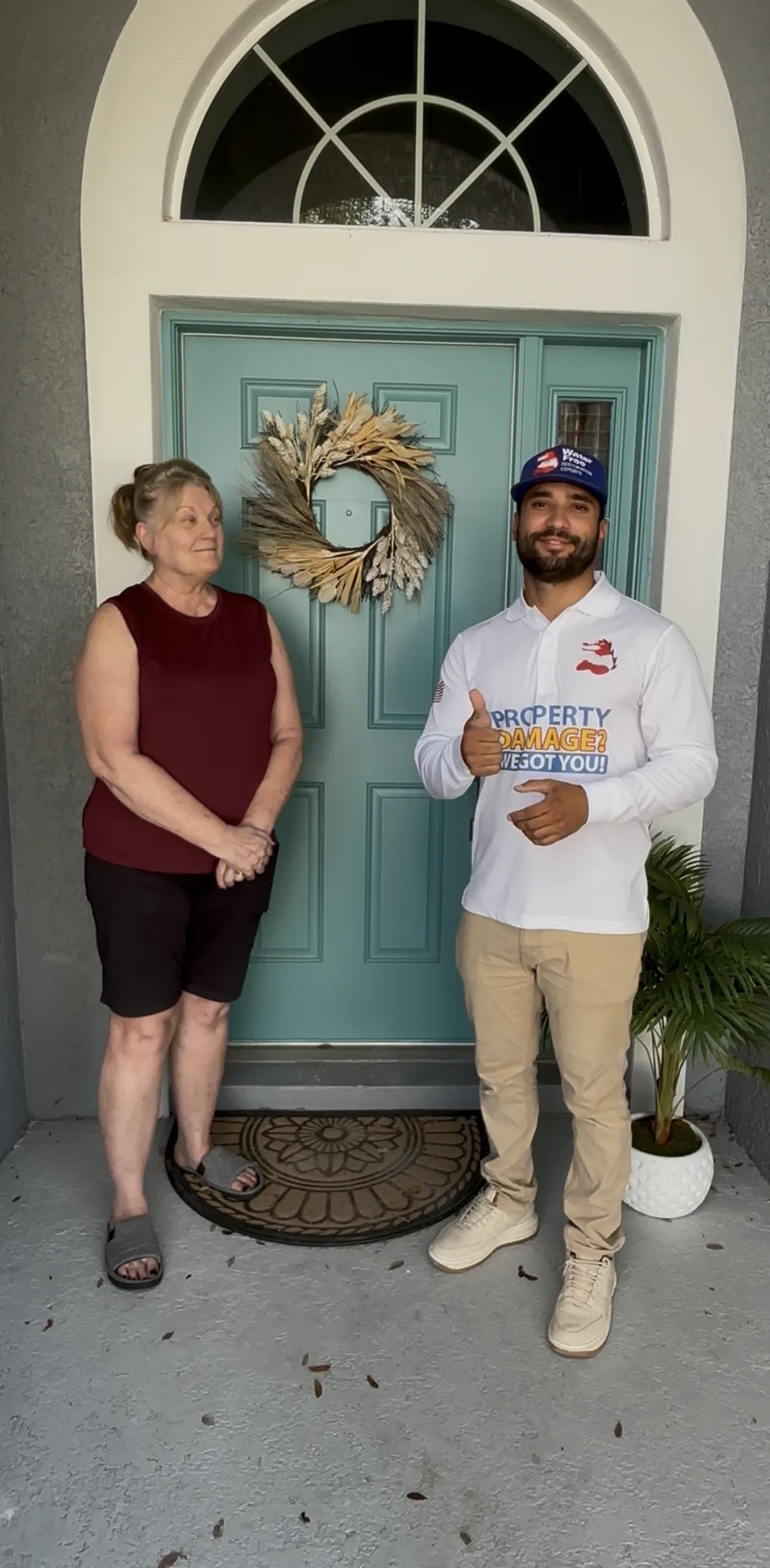
Published with permission
A clear handoff after the documented service stage.
A WaterFree team member and the client after documented remediation work; clearance verification and later rebuilding remained separate.
This photograph documents the client and team handoff. It is not presented as a testimonial and does not establish insurance coverage, finished reconstruction or independent clearance.
Actual project evidence
Contained remediation of affected kitchen materials
Visible affected materials beneath a sink were documented, isolated from adjacent rooms and addressed inside a controlled work area.
Scope note: This gallery documents remediation work. It does not claim independent clearance or show finished reconstruction.
View documented stages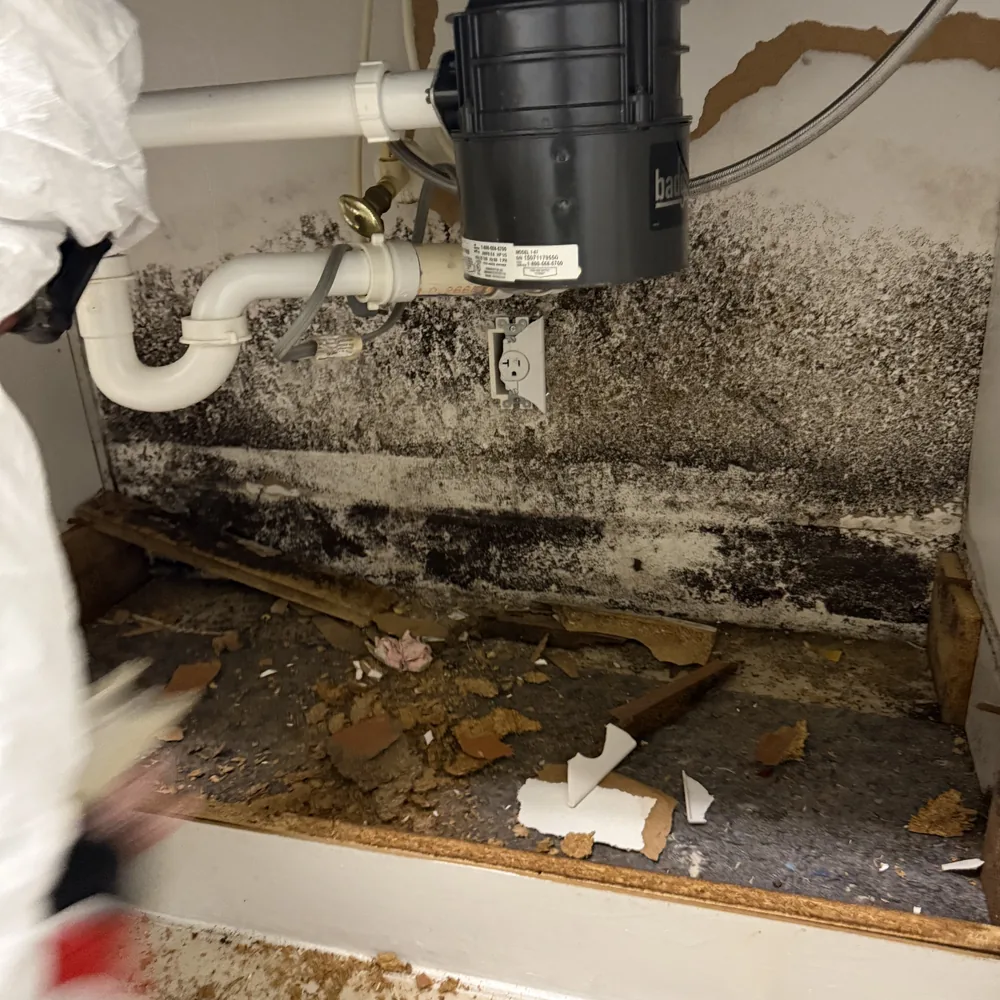
Start with a clear assessment
Tell us what happened. We’ll help organize the next step.
For active water, exposed roofing or an urgent loss, call first. For routine questions, send a request here.
Call (629) 217-5130